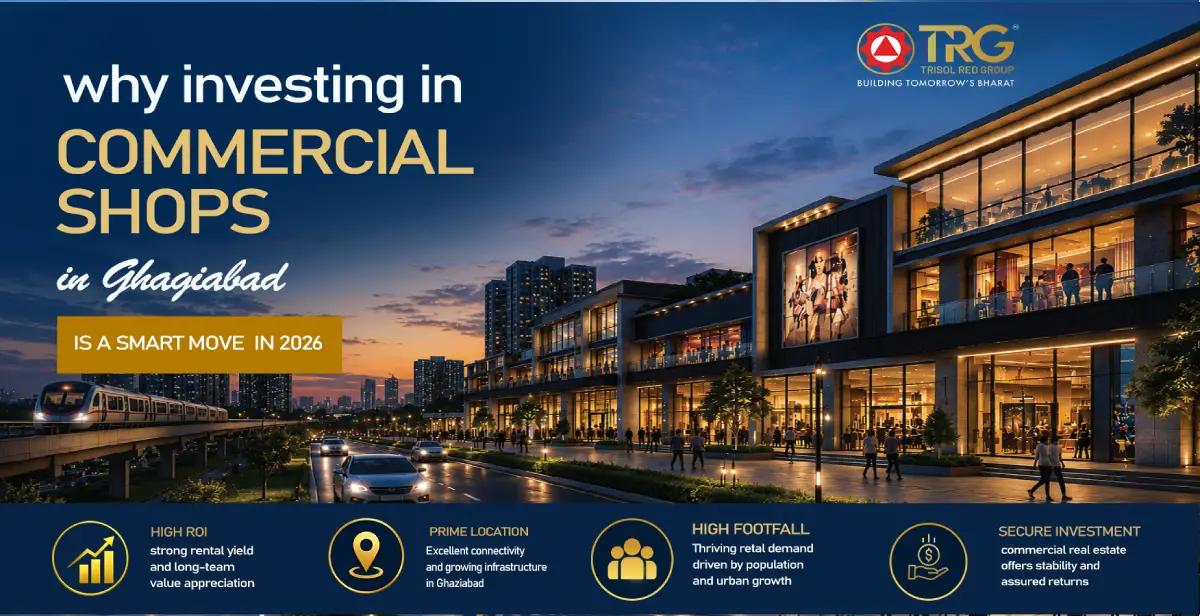
Why Investing in Commercial Shops in Ghaziabad Is a Smart Move in 2026
Ghaziabad, a thriving satellite city in the National Capital Region (NCR), has emerged as a hotspot for commercial real estate investment. With its strategic location, robust infrastructure, and rapid urbanization, the city offers unparalleled opportunities for investors eyeing long-term growth. Here’s why putting your money into commercial shops in Ghaziabad in 2026 isn’t just a safe bet—it’s a strategic masterstroke.
In This Article:
- The Economic Backbone of Ghaziabad’s Commercial Growth
- Unmatched ROI: Crunching the Numbers
- Strategic Locations for Maximum Footfall
- The Regulatory Edge: Ghaziabad’s Investor-Friendly Policies
- Future-Proofing Your Investment
- Risks and Mitigation Strategies
- A Real-World Success Story
- Frequently Asked Questions
The Economic Backbone of Ghaziabad’s Commercial Growth
Ghaziabad’s commercial real estate market isn’t flourishing by accident. The city’s proximity to Delhi, coupled with its well-developed transport networks—including the Delhi-Meerut Expressway and upcoming metro expansions—has turned it into a magnet for businesses.
- Industrial and IT Hub: The city houses major industrial zones like Sahibabad and Rajendra Nagar, alongside IT parks in Indirapuram. This dual presence ensures a steady demand for retail and service-oriented commercial spaces.
- Population Influx: With affordable residential options compared to Delhi, Ghaziabad’s population is booming. More residents mean more consumers, driving demand for shops, eateries, and service providers.
Our ground-level analysis reveals that areas like Vaishali, Kaushambi, and Raj Nagar Extension are witnessing a 15–20% annual rise in footfall for retail spaces—a trend projected to accelerate through 2026.
Unmatched ROI: Crunching the Numbers
Commercial properties in Ghaziabad currently offer rental yields between 6–9%, outperforming many residential investments in the NCR. Here’s a breakdown of why the math works:
- Lower Entry Costs: Compared to Delhi or Gurgaon, Ghaziabad’s commercial spaces are priced 25–40% lower per square foot, making them accessible to mid-tier investors.
- Appreciation Potential: Infrastructure projects like the Ganga Expressway and Rapid Rail will further boost connectivity, directly impacting property values. Historical data shows commercial assets in well-connected areas appreciate 12–18% annually post-infrastructure upgrades.
A practical example: A 500 sq. ft. shop in Vaishali purchased for ₹1.2 crore in 2023 now commands a monthly rent of ₹75,000—translating to a 7.5% yield. With the upcoming metro phase, experts predict a 22% value jump by 2026.
Strategic Locations for Maximum Footfall
Not all commercial zones are created equal. Based on our market surveys, these micro-markets stand out:
- Indirapuram: A blend of corporate offices and high-income residential towers ensures premium foot traffic. Ideal for branded retail and cafes.
- Raj Nagar Extension: Affordable rents and a growing middle-class population make it perfect for daily-needs stores and clinics.
- Crossings Republik: With educational institutes and hospitals nearby, this area suits stationery shops, pharmacies, and quick-service restaurants.
Pro Tip: Corner shops with parking access command 10–15% higher rents due to visibility and convenience.
The Regulatory Edge: Ghaziabad’s Investor-Friendly Policies
Unlike Delhi’s restrictive commercial zoning laws, Ghaziabad offers:
- Mixed-Land Use Permits: Flexibility to operate retail, offices, or clinics in designated areas.
- Faster Approvals: The Ghaziabad Development Authority (GDA) has streamlined processes, reducing project delays.
- Tax Benefits: UP’s policies, like stamp duty waivers for first-time investors, add to the financial appeal.
In our experience, investors who leverage these policies reduce their break-even period by 6–12 months.
Future-Proofing Your Investment
Commercial real estate isn’t just about location—it’s about anticipating trends. Two often-overlooked factors:
- E-Commerce Resilience: Physical shops in Ghaziabad are adapting by offering “click-and-collect” services. A bakery in Kaushambi saw a 30% revenue spike after integrating online orders with in-store pickups.
- EV Readiness: Shops with EV charging stations will gain a competitive edge as Uttar Pradesh pushes for electric mobility.
Risks and Mitigation Strategies
No investment is risk-free. Here’s how to navigate pitfalls:
- Vacancy Periods: Target areas with occupancy rates above 80%. Pre-leasing agreements with established brands can minimize voids.
- Legal Checks: Verify land titles and ensure the property is RERA-registered. We’ve seen cases where unapproved buildings led to 2–3 years of litigation.
A Real-World Success Story
Take the case of Mr. Kapoor, who invested ₹2.5 crore in a 700 sq. ft. showroom near Wave Cinemas in 2021. By 2023, the property’s value rose to ₹3.8 crore, and he secured a 10-year lease with a national apparel brand at ₹1.1 lakh/month. His secret? He prioritized proximity to entertainment hubs—a demand driver most investors overlook.
Frequently Asked Questions
-
Is Ghaziabad’s commercial real estate market saturated?
A: Far from it. While prime areas like Indirapuram are mature, emerging corridors like NH-24 and the proposed Ghaziabad-Aligarh Expressway offer untapped potential. -
What’s the ideal investment horizon for commercial shops here?
A 5–7 year hold typically maximizes returns. Shorter periods may miss appreciation cycles, while longer holds risk missing exit peaks.
-
How does Ghaziabad compare to Noida for commercial investments?
Ghaziabad offers better affordability (₹8,000–12,000/sq. ft. vs. Noida’s ₹15,000+), while Noida has higher corporate density. Ghaziabad wins for balanced risk-reward.
-
Are there financing options tailored for commercial properties?
Yes. Several NBFCs offer loans covering 60–70% of the property value at 9–11% interest, with flexible repayment tied to rental income.
-
What’s the one mistake you see investors make repeatedly?
Overlooking tenant profiles. A shop leased to a local kirana store may yield ₹50,000/month, but a pharmacy or bank branch could pay ₹80,000+ for the same space.